UPDATED: What are the relative costs for the memory types in new SSDs and DIMMs? We have the estimates below!
We updated 3D XPoint and Optane costs with actual cost today vs what is should cost if it was mature and running in high volume.
Fast NAND is what we estimate for a Z-NAND type product. Other companies are working on similar Fast NAND products
Actual values, assumptions, prices and how these will change dramatically over the next two years is available as well
#flashmem
#optane
Mark Webb
www.mkwventures.com
Wednesday, July 18, 2018
Tuesday, February 6, 2018
HDD Trends and Impacts
Multiple reports are coming out from industry analysts (Trendfocus, IDC, IHS, Gartner) on the HDD market for past year. Some interesting numbers on Units, Density, Cost, and Markets:
Lots more data available and how this affects the NAND/SSD market over the next few years
Some thoughts:
Mark Webb
www.mkwventures.com
- HDD Units relatively flat in 400Mu unit range for past 2 years (down from 2010 peak ~600M Units) . Less PCs sold and SSD encroachment in notebooks reduced TAM.
- HDD Capacity increasing 15% per year or more
- HDD Mission critical (10K+15K) units down 25% from peak in 2012, Revenue down 50%
- HDD Mission critical (10K+15K) capacity is flat for past 2 years
- HDD PC Capacity is relatively flat for past few years. CE and Enterprise Capacity is up.
- HDD Cost and price per TB is down 12%+ per year. 500GB HDDs sell for less than $30 to PC OEMs
Lots more data available and how this affects the NAND/SSD market over the next few years
Some thoughts:
- 10K and 15K market should be dead. SSDs are better and lower price per IOP... but its a slow death (Even though HDD makers
- SSDs should be this entire market with 25M units or more per year
- SATA/PCIe will take this over in next 3-5 years
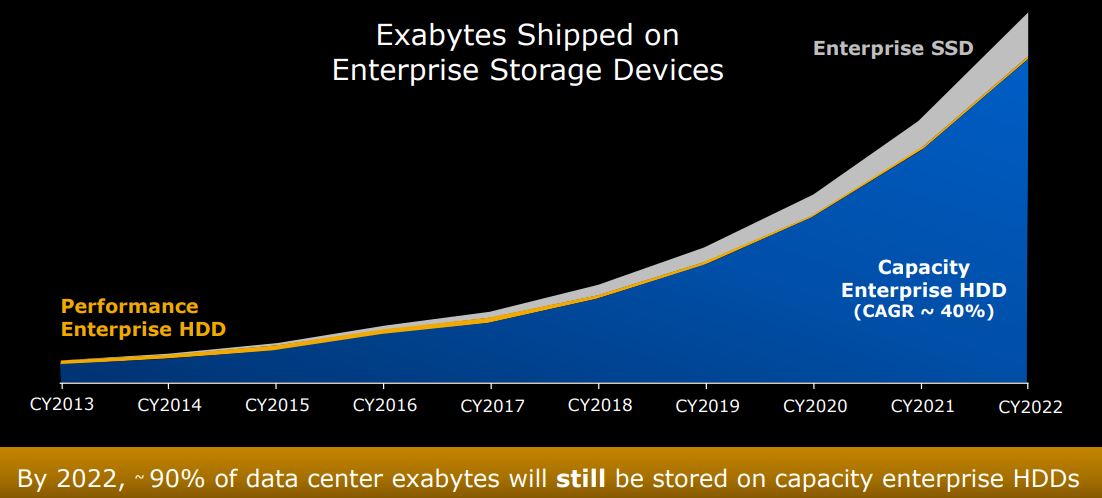
- HDD Nearline market is growing rapidly with little impact from SSDs expected. >6TBs per drive at a cost well below $30/TB and costs dropping 10-15% per year. The date explosions is driving this market for storage
- Now that NAND shortage is over, we expect SSDs resume steady penetration into PC market. Most PCs still ship with HDDs today.
- We are still several years away from SSD units outselling HDD Units . 10+ years from SSD capacity outselling SSD capacity
Mark Webb
www.mkwventures.com
Friday, February 2, 2018
Relative Costs for NAND, ZNAND, Optane Memory
What are the relative costs for the memory types in these new SSDs? We have the estimates below!
Caveats:
HDD is of course the cost leader... everything else falls into a spectrum of costs. Some products are more mature than others and that affects their cost today
Actual values, assumptions, prices and how these will change dramatically over the next two years is available as well
Mark Webb
www.mkwventures.com
Caveats:
- These are costs, not prices. Margins vary
- These are approximate costs in 2018 for the memory in key products
- All are relative to HDD costs
HDD is of course the cost leader... everything else falls into a spectrum of costs. Some products are more mature than others and that affects their cost today
Actual values, assumptions, prices and how these will change dramatically over the next two years is available as well
Mark Webb
www.mkwventures.com
Friday, January 26, 2018
How much will Persistent Memory Options Cost in 2019?
It was an outstanding conference and I was able to learn a lot on what some options for persistent memory configurations will be in 2019 and beyond. Spoiler Alert: Optane DIMMS are involved in both cheapest and most expensive options
I converted it to customer cost for Storage/Memory components in the system for some typical options including a medium SSD and big HDD
If you disagree, please tell me the correct answer (hint: Facebook, Intel, Dreamworks... my email is below).
I have specifics on why these options are probable, what the actual speeds are, and the costs for each components. Contact us for more info and system requirements estimates
Background Assumptions
- DRAM is fastest, Optane is somewhat slower but good enough. DRAM acts as cache for Optane DIMMS (Optane requires DRAM, it doesn't replace DRAM)
- NVDIMM-N is DRAM speed... and DRAM density ... and more expensive than DRAM. But Persistent!
- You still need to store stuff and HDD is about 50x cheaper than Optane, 10x cheaper than SSD
The Hypothetical Costs to a end user for some typical options
- If you want TONS of addressable memory, Optane DIMMS might be the answer
- If you want speed and persistence, NVDIMM-N might be the answer
- If you want max speed and not persistence DRAM only might be the answer
- If you are cheap: 64GB of DRAM plus an off brand SSD from Craigslist will do the trick
Just an opinion!
Mark Webb
Wednesday, January 24, 2018
Persistent Memory Summit 2018
Today is the summit that brings together many of the people working in persistent memory to discuss the future, standards, and technologies.
There will be lots of discussions on standards, programming models, and changes to computing. But there are a few pragmatic questions we are getting answers to as well this week
1) Today's Technologies: NVDIMM-N is here today and is in use in many applications. How big is the market, who are the leaders, and how fast is it growing?
2) Tomorrow's Technologies: Intel has been talking about Optane DIMMs for a long time. But customers are still waiting for production DIMMs and the CPU to go with it. Are we on track for Sep 2018 availability
3) Software to take advantage of these technologies can be slow to come out. When are the leaders planning on being able to fully take advantage of large persistent memory. If I have 1-2TB of Memory... are we ready for it?
4) Overall Market... if we look at NVDIMMS from all technologies... when do we get to the bit shipments being same as DRAM DIMMS? density is 10x... so it should be quick!
Mark Webb
www.mkwventures.com
Today is the summit that brings together many of the people working in persistent memory to discuss the future, standards, and technologies.
There will be lots of discussions on standards, programming models, and changes to computing. But there are a few pragmatic questions we are getting answers to as well this week
1) Today's Technologies: NVDIMM-N is here today and is in use in many applications. How big is the market, who are the leaders, and how fast is it growing?
2) Tomorrow's Technologies: Intel has been talking about Optane DIMMs for a long time. But customers are still waiting for production DIMMs and the CPU to go with it. Are we on track for Sep 2018 availability
3) Software to take advantage of these technologies can be slow to come out. When are the leaders planning on being able to fully take advantage of large persistent memory. If I have 1-2TB of Memory... are we ready for it?
4) Overall Market... if we look at NVDIMMS from all technologies... when do we get to the bit shipments being same as DRAM DIMMS? density is 10x... so it should be quick!
Mark Webb
www.mkwventures.com
Sunday, January 7, 2018
SSD Growth Forecast in Compute Markets: Enterprise/Datacenter
Datacenter/Enterprise: SSDs provide 30% of units and 15% of capacity sold in 2017.
Projections for ALL SSDs and applications from a number of outlets are 15-19% unit growth and 15-20% Revenue growth. We have all the details behind those numbers if you want them but some specifics on SSD/HDD ratio on Enterprise/Datacenter
SSD% of total Enterprise HDD+SSD unit sales finished 2017 just around 30%, climbing from 23% in 2016. For 2018 we predict continued growth to 36%. Due to nearline and Cold storage HDD dominance, SSDs provide <15% of the new capacity sold in the enterprise today.
Note: SSDs are less than 15% of NEW capacity sold. they are less than 10% of total capacity
By Application:
- SSDs replace mission critical 10K/15K HDDs at a very fast rate as cost per IOPs is equivalent or better. SSDs should replace 90% of this market eventually
- SSDs in server markets are growing steadily in PCIe and SATA applications
- SSDs continue to make little impact in nearline and cold storage applications
- TLC utilization will support SSD growth in all applications
Reasons for methodical increase:
- SSD $/GB Pricing is still 10x HDD Pricing in most enteprise applications
- SSD Prices are dropping but so are HDD prices. no crossover coming
- Anything with $/IOPS Metric is moving to SSD. Anything with $/GB Metric (Nearline/Cold) is staying HDD
- Enterprise customers are slow to move and change configurations. 10K/15K HDDs still sell even though there is limited rationale for using them over SSDs
Side note: Optane (p4800x) and Fast NAND applications (Z-NAND and products from WDC/Hynix/Toshiba) will impact server NVMe SSDs sales for fastest applications. The Jury is still out on how much of a premium customers are willing to pay over NAND SSDs.
Wednesday, January 3, 2018
SSD Growth Forecast in Compute Markets: Client Notebooks
Projections for SSDs from a number of outlets are 15-19% unit growth and 15-20% Revenue growth. We have all the details behind those numbers if you want them but some specifics on attach rates.
Client Notebook SSD attach rate finished 2017 just around 50%, climbing from 20% in 2014. For 2018 we predict continued steady growth fueled by SSD/NAND price drops. The average attach rate for 2018 will exceed 55% ... growing to almost 70% by end of 2019..... if NAND Prices start to drop as expected. No tipping point is coming....
Reasons for methodical increase:
- SSD $/GB Pricing is still 8x HDD Pricing
- SSD Prices are dropping but so are HDD prices. SSD $/GB multiplier is 3x HDD in 2021
- Many people still want large capacity drives
- SSD performance is better than HDD, but it is not required for any application
For details on attach rates, SSD pricing, HDD pricing, and cost assumptions over the next 5 years, contact us!
Side note: at this point, we dont see an impact of Optane SSDs or Memory on these numbers. Optane doesn't impact notebook market at this time. See Desktop report summary for impact on that market.
Mark Webb
Subscribe to:
Posts (Atom)